
Latest Update: October 2026
This guide explains the core steps contractors can use to track project costs, compare actual spending with estimates, and identify potential overruns. Specific accounting treatments and tax requirements may vary by project, contract, and jurisdiction.
Answer Snippet
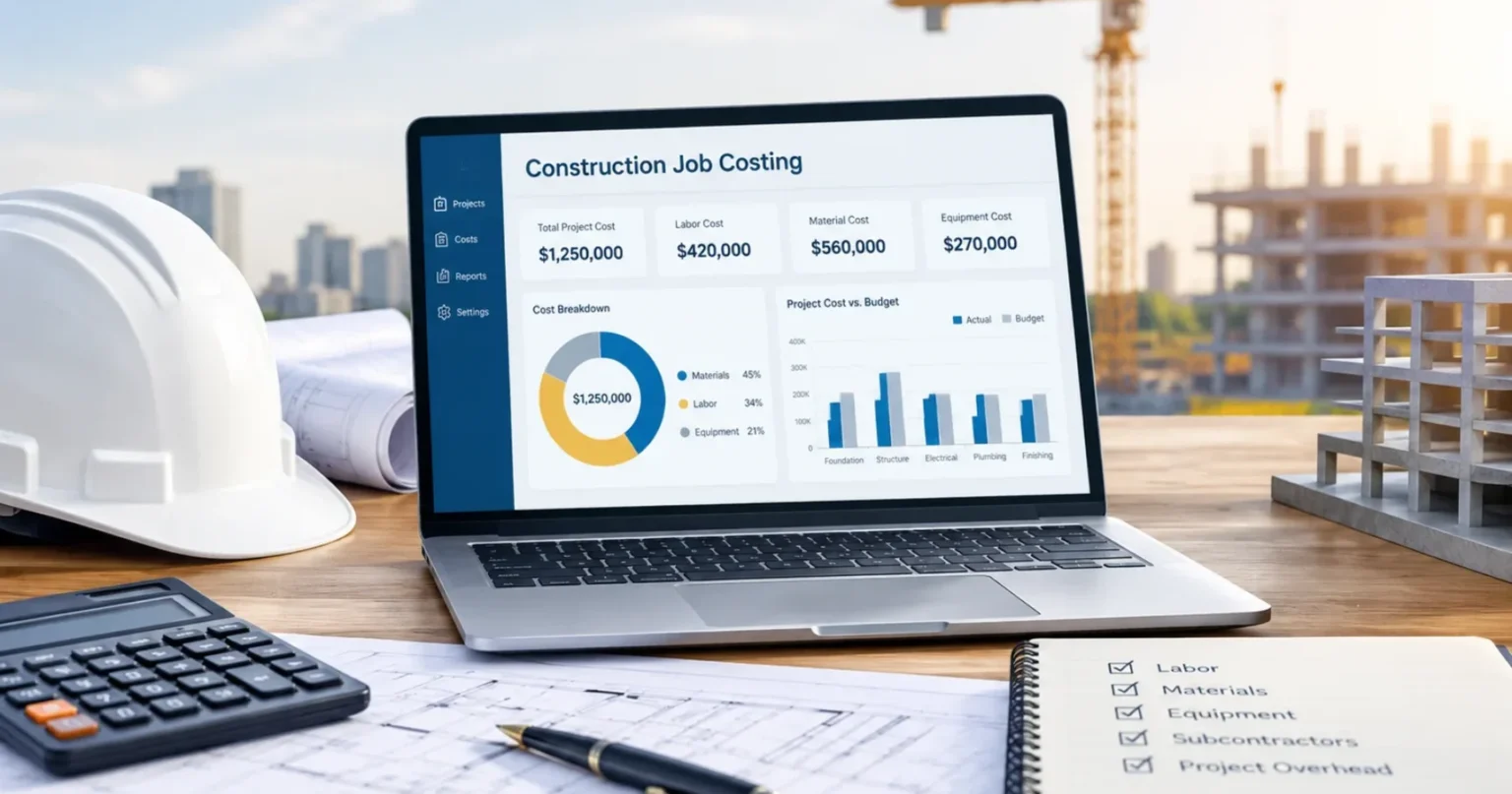
Construction job costing is the process of tracking labor, materials, subcontractor charges, equipment, and other project-related expenses against an individual construction job. Contractors use it to compare estimated costs with actual spending, identify budget overruns, and assess project profitability. Reviewing these figures throughout a project helps management address cost issues before they significantly affect the final financial results.
Key Facts at a Glance
Job costing tracks expenses for each construction project, helping contractors understand how much each job costs.
Labor, materials, equipment, and subcontractors make up major project costs and need to be recorded accurately.
Comparing actual costs with the budget reveals overspending and helps contractors identify potential cost overruns early.
Forecasting remaining costs helps estimate the final project expense and determine whether the job is likely to stay within budget.
Reviewing completed jobs helps contractors identify cost differences, improve budgeting accuracy, and prepare better estimates for future projects.
Quick Read
Assign every project a unique job number and consistent cost codes.
Establish a detailed budget before work begins.
Record labor, materials, equipment, and subcontractor costs against the correct project.
Compare actual spending with estimates throughout the project.
Investigate variances and update the forecast of total completion costs.
Use completed project data to improve future estimates.
Introduction
A construction project can appear profitable when the contract is signed, yet finish with a much smaller margin than expected. Material prices may increase, labor hours may exceed estimates, or additional work may consume resources without corresponding compensation. If management discovers these problems only after the project closes, the opportunity to correct them has largely passed.
Construction job costing helps contractors monitor these financial changes while work is underway. Rather than relying solely on company-wide income statements, management can see what each project costs, where spending differs from the original budget, and whether the expected profit remains achievable.
The process is useful for general contractors, specialty contractors, and construction businesses managing several projects simultaneously. Its effectiveness, however, depends on accurate records, consistent cost classification, and regular review.
What Is Construction Job Costing?
Construction job costing is an accounting and management process that assigns expenses to specific projects. Each job has its own budget, recorded costs, outstanding commitments, and financial results.
Unlike general bookkeeping, which organizes transactions across the business, construction job cost tracking connects expenses to the work that generated them. A lumber purchase for one renovation, for example, should be charged to that project rather than recorded under an unidentified materials expense.
Typical cost categories include:
- Labor: Wages, employer payroll costs, benefits, and other applicable labor expenses.
- Materials: Building supplies, fixtures, consumables, and delivery charges where applicable.
- Subcontractors: Contracted trade work and approved additional charges.
- Equipment: Rental charges or allocated costs for owned equipment.
- Project overhead: Job-specific permits, temporary utilities, site facilities, and supervision costs.
Company-wide overhead, such as office rent and administrative salaries, also affects profitability. Contractors should establish a consistent policy for recovering these costs through pricing or allocating an appropriate share to projects. The method should avoid counting the same expense twice.
How Does Construction Job Costing Work? A Step-by-Step Guide
Step 1: Establish a Project Budget
Start with the project estimate and break it into meaningful cost categories. The budget should reflect the agreed scope of work, expected labor hours, material quantities, subcontractor quotations, equipment requirements, and applicable indirect costs.
Use cost categories that match the estimating process. If the estimate separates framing, electrical work, plumbing, and finishing, the cost reports should follow a comparable structure.
This alignment makes later comparisons more useful. A broad materials total might show that spending is excessive, but detailed categories can help reveal whether the problem involves one trade, a price increase, or material waste.
Step 2: Assign Job Numbers and Cost Codes
Give each project a unique identifier and use it consistently across purchase orders, invoices, employee time records, subcontractor bills, and expense reports.
Cost codes provide a second level of detail. They identify the type of work or expense associated with a transaction. A contractor might use separate codes for concrete, electrical installation, equipment rental, and site preparation.
A practical system should provide enough detail for management decisions without becoming unnecessarily complicated. Consistent coding is more valuable than an elaborate structure that employees rarely use correctly.
Step 3: Record Labor and Material Costs
Labor costs should reflect the actual resources used on the project. Record employee hours against the correct job and activity, then apply an appropriate labor cost rate that accounts for relevant employer expenses.
For example, if a crew spends more hours installing flooring than estimated, the job cost report should capture the additional labor. Management can then investigate whether the cause was an inaccurate estimate, rework, scheduling difficulties, or unexpected site conditions.
Materials require similar discipline. Match purchases and supplier invoices to the relevant project, check quantities and prices, and record returns or credits. Materials transferred between projects should also be documented so that one job is not overstated while another is understated.
Step 4: Capture Subcontractor and Equipment Costs
Record subcontractor commitments when agreements are executed, then track invoices, approved change orders, payments, and remaining obligations. This provides a clearer view of future costs than relying only on invoices already received.
Equipment costs need consistent treatment, too. Rental equipment is generally assigned to the project using it. For owned equipment, contractors can establish a documented allocation method based on relevant ownership and operating costs.
These records help management identify obligations that may not yet appear in the accounts payable balance. They also reduce the risk of evaluating a project using incomplete cost information.
Step 5: Compare Actual Costs with the Budget
Once costs are recorded, compare actual spending against the budget for each category.
Cost variance = Actual cost − Budgeted cost
A positive variance indicates spending above budget; a negative variance indicates spending below budget. Neither result should be interpreted without considering the work completed and costs still expected.
For example, suppose a contractor budgets $20,000 for labor on a renovation. After a substantial portion of the work is completed, recorded labor costs reach $17,000. That figure may indicate a problem if most of the labor-intensive work remains, but it may be reasonable if the work is nearly finished.
The important question is not simply how much has been spent. It is whether the remaining budget is sufficient to complete the remaining work.
Step 6: Forecast the Final Project Cost
A useful job cost report looks forward as well as backward. Management should estimate the total cost expected when the project is complete, taking recorded expenses, remaining work, outstanding commitments, and known changes into account.
Forecast final cost = Actual costs to date + Estimated cost to complete
Compare the forecast with the current contract value, including approved changes. This helps identify whether expected profitability is improving, holding steady, or deteriorating.
If a project is heading over budget, management can investigate the underlying causes, revise purchasing or scheduling decisions where practical, and address scope changes before additional costs accumulate.
Step 7: Review Results and Improve Future Estimates
At completion, compare the final project costs with the original estimate and latest forecast. Document significant differences and identify lessons that apply to future work.
Repeated labor overruns might indicate that standard productivity assumptions need adjustment. Frequent material variances could point to outdated supplier prices, purchasing issues, or excessive waste.
This feedback loop strengthens construction cost control over time. Estimates become more grounded in actual operating experience, helping contractors make better bidding and resource-allocation decisions.
Common Construction Job Costing Mistakes
Even a well-designed process can produce misleading reports when basic controls are inconsistent.
- Recording costs too late delays the identification of overruns. Transactions should be entered promptly, with a defined process for handling missing invoices and unrecorded commitments.
- Using incomplete labor rates can understate project costs when employer payroll expenses, benefits, or other applicable labor burdens are omitted.
- Ignoring change orders creates a mismatch between the project’s actual scope, costs, and recognized contract value. Additional work should be documented, approved as required, and reflected in the appropriate project records.
- Reviewing only total company expenses hides differences between individual projects. Management needs project-level information alongside overall financial statements.
Finally, inconsistent cost codes and unsupported allocations undermine reporting accuracy. Clear procedures, reconciliations, and regular reviews help keep the information dependable.
How Fresnel Partners Helps
Reliable project reporting requires more than entering invoices into accounting software. Construction businesses also need consistent transaction coding, reconciled records, clear reporting procedures, and timely financial information that supports management decisions.
Fresnel Partners can support relevant accounting and financial reporting workflows by helping businesses organize financial records, maintain consistent reporting processes, and improve visibility into recorded expenses. Depending on the agreed scope of services, this support can help management review project-level information and identify discrepancies that require investigation.
The value lies in making financial information more useful. When project costs are recorded accurately and reviewed alongside budgets and forecasts, business leaders have a stronger basis for evaluating performance, assessing pricing decisions, and planning cash requirements.
Construction job costing remains dependent on the quality of source records and the contractor’s project management practices. Clear responsibilities for approving purchases, recording labor, documenting changes, and reviewing variances are essential to a dependable process.
Conclusion
Construction projects rarely follow their original estimates perfectly. The difference between a manageable cost overrun and a serious profitability problem often comes down to how quickly management recognizes the change.
A disciplined job costing process connects estimates with actual spending and expected completion costs. It also turns completed project results into practical information for future bids. Over time, this approach helps contractors make more informed decisions about pricing, resource use, and project selection.
Frequently Asked Questions
Contractors generally need the project estimate, labor hours and applicable labor rates, material purchases, subcontractor invoices and commitments, equipment charges, and relevant project overhead. Approved change orders and remaining obligations should also be tracked. The information must be assigned to the correct job and cost category so management can compare actual expenses with the budget and forecast the cost of completing the work.
Contractors should review costs regularly while projects are active, with the frequency reflecting project size, risk, and transaction volume. Weekly reviews can be useful for projects with significant spending or rapidly changing conditions. Smaller projects may require a different cadence. The essential point is to record transactions promptly and investigate meaningful variances before they become difficult or expensive to correct.
Construction accounting covers the broader financial activities of a construction business, including general ledger entries, accounts payable, accounts receivable, payroll, and financial reporting. Job costing focuses on the financial performance of individual projects. The two should work together: accurate accounting records provide the underlying data, while project-level cost reports help management understand how each job contributes to overall business results.
Job costing cannot prevent every overrun, particularly when unforeseen site conditions or material price changes occur. It can, however, reveal unfavorable trends earlier. Comparing actual expenses with the budget and reviewing estimated costs to complete helps management investigate excess labor hours, purchasing discrepancies, or scope changes. Timely information creates more opportunities to adjust scheduling, purchasing, or project plans before additional costs accumulate.
Yes. A spreadsheet can be a practical starting point for a contractor with a manageable number of projects and transactions. It should include a unique job identifier, consistent cost categories, budgeted amounts, actual expenses, outstanding commitments, and estimated remaining costs. As project volume grows, the business may need more structured accounting software, clearer approval workflows, and automated reporting to maintain accuracy without excessive manual work.
What’s Next?
Improve Project Cost Visibility with Fresnel Partners. Accurate project-level financial information helps construction businesses understand where money is being spent and whether their projects are delivering the expected results. Fresnel Partners can discuss your accounting and reporting requirements, including ways to strengthen transaction accuracy, reporting consistency, and financial visibility. If your current process makes it difficult to reconcile project expenses or obtain reliable financial reports, let’s discuss your requirements and explore the support that best fits your business.
Author Profile

- Paul Clough, CPA
- At Fresnel Partners, Paul Clough works to increase the power and focus of entrepreneurial businesses for their executives and owners. He does this by providing planning, operational, and management development advisory services that enable clients to solve problems, realize opportunities, and manage their businesses more effectively. Paul is a CPA and provides tax planning and compliance services for individuals and business owners. Before starting his business in 2009, Paul held corporate executive positions in several industries including cable television technology, subscription consumer services, and outsourced business services. After early career work in finance, Paul’s management responsibilities were in sales and marketing roles where he conceptualized, planned, and launched several business units. Paul earned an MBA from Harvard University and a BS in Accounting from Bucknell University. He is active in his local community, having served as the President of the Youth Orchestra of Bucks County and Board Chair for the Lower Bucks County Chamber of Commerce.
- October 27, 2026UncategorizedHow Does Construction Job Costing Work? A Step-by-Step Guide
- September 23, 2026UncategorizedWhat Are Client Accounting Services (CAS)? A Guide for Small Businesses
- September 9, 2026UncategorizedWhat Is FP&A (Financial Planning and Analysis)? A Practical Guide
- August 25, 2026UncategorizedBusiness Tax Planning vs. Tax Return Preparation: What’s the Difference?